
Malaysia was a ‘Safe Haven’ for the Rohingya Refugees. Why has it Changed its Stance?
- Jaeden Tee
- Dec 23, 2025
- 7 min read
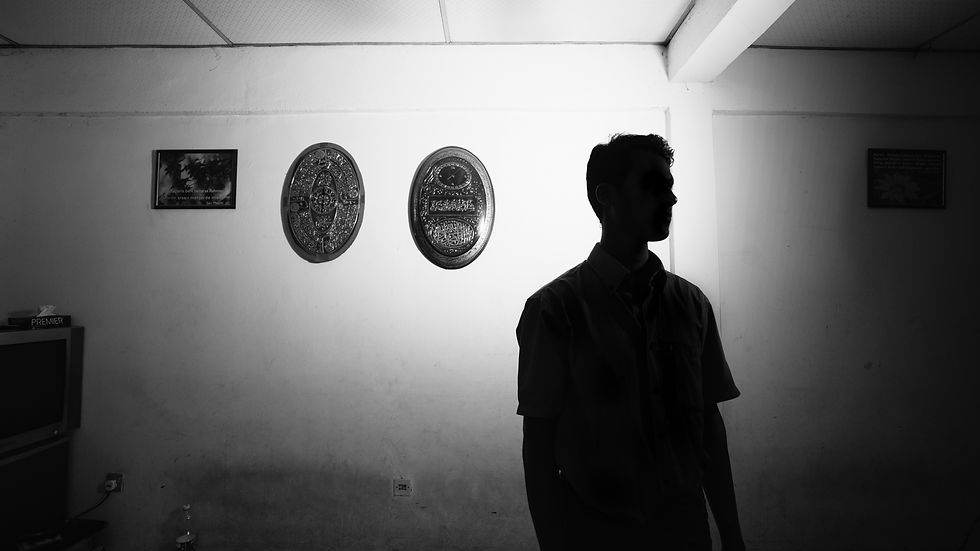
Amid a global rise in hostile sentiments against refugees, a curious case is unfolding in Malaysia.
Despite not being a signatory to the UN Resolution 429 (V), which pertains to the landmark adoption of the Convention Relating to the Status of Refugees, this small Southeast Asian country of 35.56 million people hosts the largest refugee population in ASEAN; some 211,360 of them, as registered with the United Nations High Commissioner for Refugees (UNHCR), as of the end of October 2025. The majority of these refugees are from neighbouring Myanmar, a nation of 55 million people currently engulfed in a civil war between the ruling junta and a broad faction of pro-democracy forces. The refugees mainly belong to the Rohingya community: a minority ethnic group in Myanmar who’ve faced persecution and genocidal campaigns for decades, which escalated in 2016 and triggered one of the world’s largest forced displacements. In Malaysia, the Rohingya number is over 120,000 (according to UNHCR estimates), with some estimates reaching as high as 150,000, becoming Malaysia’s largest refugee group.
Officially, Malaysia tolerates the presence of the Rohingya refugees on “humanitarian grounds”, in that it permits them to remain in the country while awaiting resettlement to another country. This policy was formalised on April 30th 2020, when Malaysia’s Home Minister Hamzah Zainudin stated: “Based on humanitarian grounds, the government has allowed UNHCR cardholder illegal immigrants to live in this country temporarily before being resettled to third countries by UNHCR on case by case basis.” It should be noted that refugees not registered with the UNHCR remain subject to Malaysia’s stringent immigration regime, with refugees being deemed “Pendatang Asing Tanpa Izin”, or “foreigners without permission,” rendering them vulnerable to the state’s deportation actions.
However, over the last few years, there has been a shift in sentiment and policy. Former Malaysian Prime Minister Najib Razak himself went from imploring the world to stand up against the genocide of the Rohingya in 2016, to declaring that Malaysia is not obliged to help them in 2020. This shift in policy marks an unsettling trend. Malaysian politicians are willing to frame the plight of the Rohingya through a Muslim ummah (Arabic for the whole Muslim community) lens, invoking Muslim solidarity to appeal to the country’s conservative Malay-Muslim voters, and yet are unwilling to take substantial actions to protect the Rohingya refugee population in Malaysia. Malaysia’s non-participation in any international refugee conventions is notable here, ensuring the state’s obligations to the Rohingya refugee population are minimal.
Such invocations of Muslim solidarity for political purposes, mixed with apathy towards the struggles of Malaysia’s Rohingya population, transcends political divides in Malaysia. In the same 2016 rally where Razak called for global support for the Rohingya, he was joined by the opposition Parti Islam Se-Malaysia (PAS) president Abdul Hadi Awang, who condemned the “uncivilised” brutality faced by the Rohingya in Myanmar. Yet, at the same time, members from PAS have engaged in vocal opposition to the temporary settlement of Rohingya refugees in Malaysia, with one PAS delegate going as far as to brand the Rohingya refugees in Malaysia as “cowards” for fleeing the oppression occurring in Myanmar.
These policies have led to severe violations of human rights, as the Rohingya live under the constant threat of deportation, while lacking many essential rights to healthcare, education, shelter, and more.
The ‘Safe Haven’ That Wasn’t
To understand this shift in policy, one must first understand the origins of the Malaysian refugee crisis and the current status of Rohingya refugees in Malaysia.
In late 2016, the Myanmar Army engaged in a brutal military operation – now classified by the UN as “ethnic cleansing” – against the Rohingya population native to Myanmar’s Rakhine State. The genocidal campaign waged by the Myanmar Army triggered a flight of more than 742,000 Rohingya refugees from Myanmar. This forced displacement is considered one of the world’s largest refugee crises in modern history. While the bulk of Rohingya refugees fled to Bangladesh, with many residing in the world’s largest refugee camp at Cox’s Bazar, Malaysia has taken in a substantial proportion of the displaced population.
Part of the reason why Malaysia became home to such a substantial population of refugees from Myanmar is the country’s position as a perceived “safe haven”, with its relatively high standard of living and stability compared to the rest of the region, leading to many attempting to make the perilous journey to the country via boats, despite significant risks. A better healthcare and education system, seemingly abundant employment opportunities and better public safety — relative to both Myanmar and Bangladesh — all serve to make Malaysia and its urban centres an attractive destination for Rohingya refugees.
“I see Kuala Lumpur [capital of Malaysia] as my second home because it is better than Rakhine State. My husband is living here, he can work here. In Rakhine, our people are persecuted, we faced harassment and we felt unsafe there.”
— A 25-year-old Rohingya woman in Kuala Lumpur, interviewed by the Mixed Migration Centre, a global network headquartered in Geneva, Switzerland, in 2020.
The shift in accommodation of the Rohingya is also connected to former PM Razak’s own corrupt political legacy. In trying to save his career in 2016-17, Razak frequently referenced the suffering of the Rohingya in campaign rallies and speeches, in which he called on the global community to act against the “genocide” of the Rohingya population in Myanmar. His invocation of Muslim solidarity in early 2017 at the Organisation of Islamic Cooperation (OIC) gathering in Kuala Lumpur is an example of this. The use of an Islamic ummah lens to describe the crisis, alongside frequent references to the Muslim faith most Rohingya identify with, shows the extent to which Malaysian politicians are willing to utilise the crisis to gather political support from conservative Muslim voters in Malaysia. In 2016, a coalition of Muslim groups in Myanmar wrote an open letter, condemning Razak’s use of the crisis for “self-interest and political purposes.”
Using Pandemic Laws to Control Refugees
On the ground, however, this rhetoric doesn’t translate to any support for the Rohingya, who continue to face a systemic policy of neglect and facilitation of abuse by the Malaysian government. At the moment, the community is also vulnerable to exploitation as they seek work in the informal sector.
Since the pandemic, the Malaysian government has also imposed stricter immigration measures as more and more boats full of refugees arrive from Myanmar and Bangladesh, deploying pandemic rules to justify police crackdowns and arbitrary detentions of newly arrived refugees. Without any international refugee framework to protect them, Rohingya refugees lack any significant legal protections, especially as the police, immigration and customs officers search, arrest, and interrogate them under Malaysian law. This often leads to months of abusive treatment in crowded detention centres, without international monitoring due to Malaysia’s refusal to allow UNHCR access to immigration centres since August 2019.
“We would get beaten when we asked for more food, took an extra mug of water to shower, or asked for a blanket for the cold.”
— Ali, a Rohingya refugee detained at Belantik Immigration Detention Center (IDC), interviewed by Human Rights Watch in 2024.
Since 2021, the Malaysian government has also engaged in forcible deportations of Rohingya refugees. On February 23rd, 2021, the government deported 1,086 individuals, including two unaccompanied children and nine asylum seekers, to Myanmar, defying a court order that halted the operation.
It’s also clear that government policy on refugees is motivated by public sentiment against refugees since the pandemic. In 2020, an open letter to then Prime Minister Muhyiddin Yassin by Human Right Watch revealed significant amounts of discriminatory and dehumanising language emerging on Malaysian social media platforms targeting the Rohingya refugees. This includes online petitions calling for their forced deportation. This has created a hostile environment for the Rohingya refugees in Malaysia, with nearly half of the Rohingya respondents in the Mixed Migration Centre’s study in Kuala Lumpur reporting experiencing increased racism and xenophobia since the pandemic.
“Ever since the coronavirus outbreak began in Malaysia, some locals have been against us and see us as a threat. This makes me feel so stressed and fearful. We don’t know what’s going to happen next.”
— A 26-year-old Rohingya man in Kuala Lumpur interviewed by the Mixed Migration Centre in 2020
“I heard about the hate campaigns against us. It made me feel depressed. We already faced xenophobia and discrimination in Rakhine state and that’s why we left our country. We expected it to be better here, but many local Malaysians don’t accept migrants, especially Rohingya people.”
— A 30-year-old Rohingya woman in Kuala Lumpur interviewed by the Mixed Migration Centre in 2020
Counting the Refugees: A Hope for Change?
Despite the ongoing weaponisation of the statelessness of the Rohingya refugees in Malaysia, there is hope that the government will change its stance for the better. While the scope of Malaysia’s agreement to any refugee-related international conventions remains grim, according to the UNHCR, a shift in policy could signal a significant change for the status of refugees in the country.
Early this month, on 2 December, Deputy Home Minister Datuk Seri Dr Shamsul Anuar Nasarah addressed the House of Representatives and declared that the Malaysian government would be “developing a registration system to collect biometric data on all refugees and asylum seekers in Malaysia”.
The official purpose of this initiative, as outlined in National Security Council Directive No. 23, is to provide the government with official data on refugees. This could then allow the Malaysian government to “guide social support, employment and education programmes”, as the Deputy Home Minister has stated, eventually allowing refugees to “live legally in Peninsular Malaysia and gain access to employment, education and healthcare”.
It’s possible, then, that this new policy could provide a pathway to legal status for both the Rohingya and other refugee groups in Malaysia, culminating in this vulnerable community being able to access proper avenues for healthcare, education, work, and more.
One cannot ignore the risk of such a policy being weaponised – once again – by the Malaysian government. Deportations, the threat of incarceration and a lack of any meaningful legal rights continue to define the status of Rohingya refugees in Malaysia. Ultimately, the Malaysian government should make good on its promises of a “safe haven” for the Rohingya, who continues to face genocidal conditions in their home country, and confront the growing humanitarian refugee crisis by cooperating further with the UNHCR to ensure the well-being of all refugees in the country is safeguarded.
Written by Jaeden Tee
Edited by Pallavi Pundir


Comments